
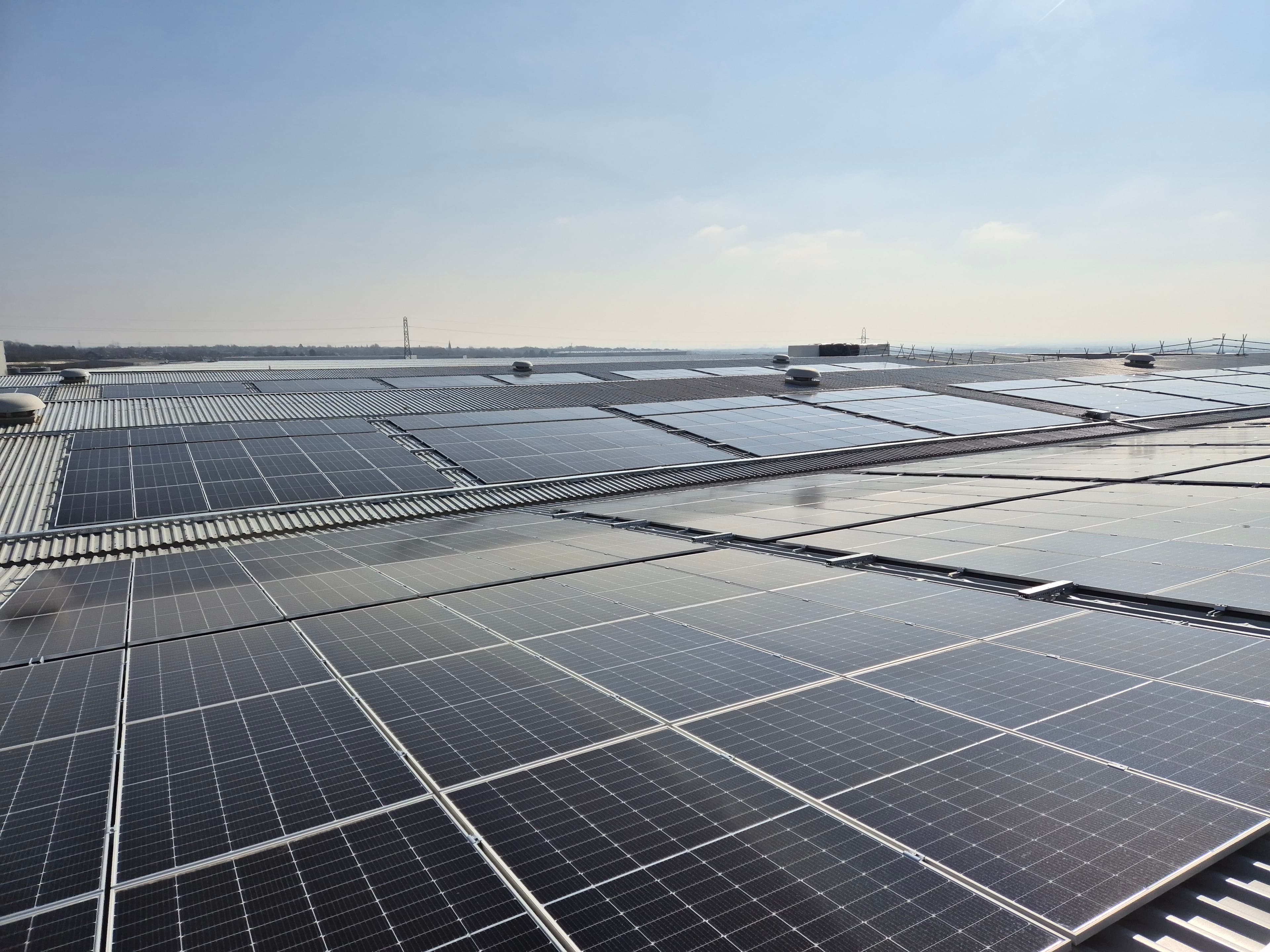
How Solar Works
Solar panels aren't complicated once you can see where the electricity actually goes. Here's the whole journey, from sunlight to your bill, in one picture — then broken down step by step below.
The journey, step by step
Sunlight hits your panels
Solar panels are made of photovoltaic (PV) cells that generate direct current (DC) electricity whenever daylight hits them — even on an overcast day, just less of it.
The inverter converts it to usable power
Your home and the UK grid both run on alternating current (AC), not DC. The inverter — a box usually mounted near your meter — converts the panels' raw DC output into AC electricity your appliances can actually use.
Your home uses it first
Whatever you're using at that moment — kettle, lights, freezer, EV charger — draws from your solar generation before it draws from the grid, so you're not paying a supplier for power you're already making.
A battery stores the rest, if you have one
Extra generation you're not using immediately can charge a home battery instead of going to waste, so you can draw on stored solar power in the evening or at night rather than buying it back from the grid.
Surplus power is exported and paid for
Once your home (and battery, if fitted) has what it needs, any leftover generation flows out to the national grid automatically — and you get paid for it. See below for how that payment actually works.
Selling power back to the grid
Every UK electricity supplier with more than 150,000 domestic customers is legally required to offer a Smart Export Guarantee (SEG) tariff — a rate, in pence per kWh, that they pay you for every unit of solar electricity you export to the grid rather than use yourself. It's metered separately from your normal import meter (or via a smart meter that tracks both directions), so exports are measured, not estimated.
SEG rates vary by supplier and change over time, and you're free to choose a different supplier for your export tariff than the one you buy electricity from — it's worth shopping around rather than accepting whatever your current supplier defaults you to. A bigger system, or adding a battery so you use more of your own generation before exporting the rest, both change the numbers — which is exactly what the solar payback calculator models for your specific roof and system size.
See what this means for you
Run your own postcode and roof through the calculator for a real generation, savings, and payback estimate — or book an energy efficiency survey for a full, engineer-reviewed look at your site.